Newsletter
What online marketplaces now tell HMRC about sellers, and what it means for a clear-out
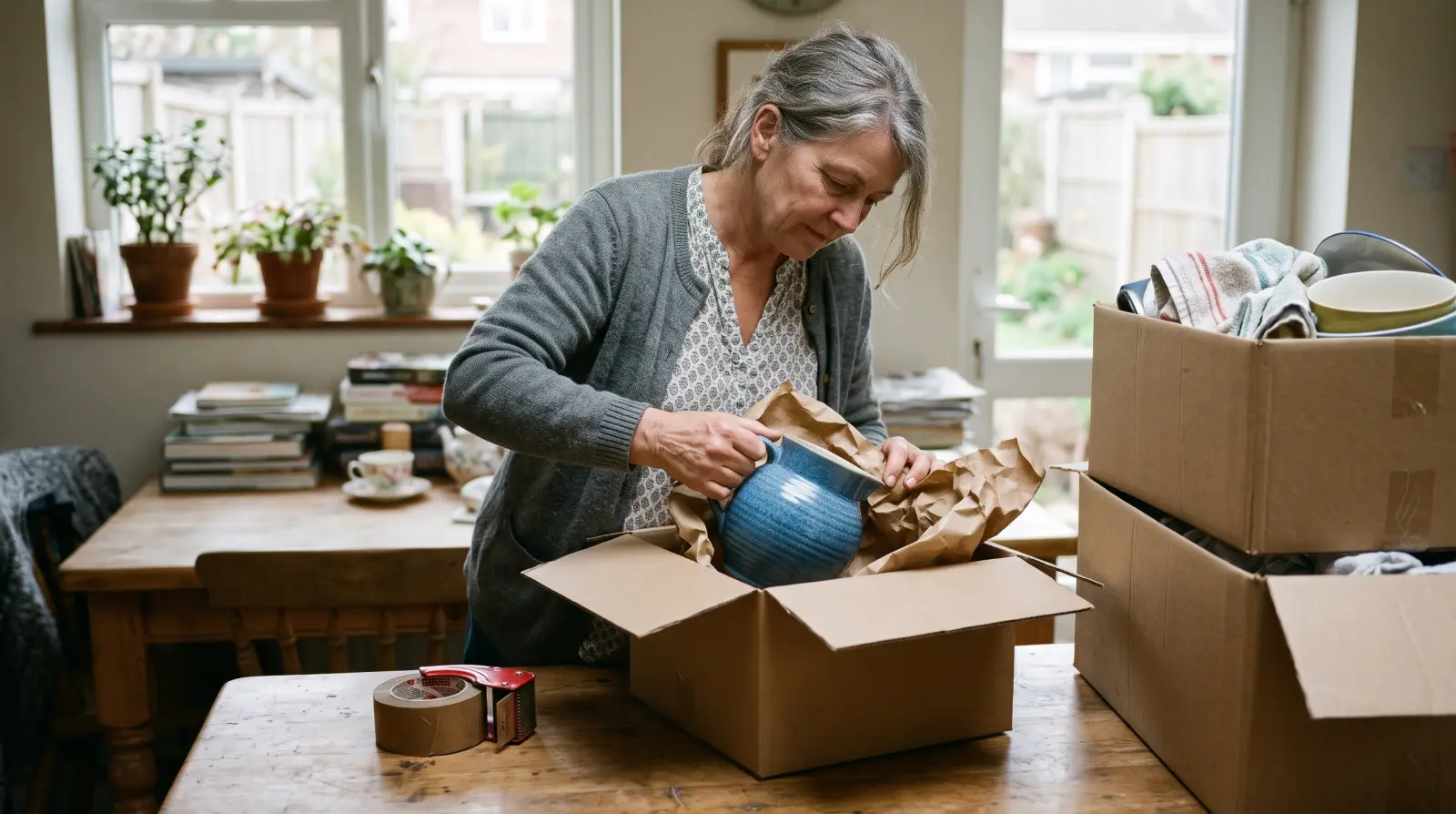
A loft clear-out, a wardrobe sorted before a move, a set of golf clubs nobody uses: plenty of households now sell their unwanted things online. Since 2024 the platforms they use send HMRC an annual report on some sellers, and that has raised understandable questions.
The rules are known in the UK as the Reporting Rules for Digital Platforms. Their purpose is to give tax authorities information about income earned through online marketplaces, in the same way that banks already report interest. They did not change what is taxable.
What changed in 2024
The rules took effect in the UK on 1 January 2024. Online platforms that let people sell goods, or provide services, now collect details about their sellers and report them to HMRC once a year. The first reports, covering 2024, went to HMRC by 31 January 2025.
For individual sellers, platforms collect the seller's full name, home address, date of birth and tax identification number, which for a UK resident is the National Insurance number. They also report what the seller received through the platform. A platform must give its sellers a copy of the information it reports about them, so nobody needs to guess what has been sent.
Which sellers are reported
To keep occasional sellers out of the reports, there is an exclusion for sellers of goods. A platform does not have to report a seller who makes fewer than 30 sales of goods in the year and receives €2,000 or less for them, which HMRC puts at roughly £1,700.
Both conditions must be met for the exclusion to apply. A seller with 30 or more sales is reported even if the total is small, and a seller whose takings pass the money threshold is reported even with only a handful of sales. The exclusion covers goods only: it does not apply to services, the rental of transport or the rental of property.
Reporting is not a tax
HMRC's guidance is direct on this point: a platform reporting your details to HMRC does not automatically mean you owe tax. In a statement in December 2024, HMRC said there were no new tax obligations for people selling services or unwanted items online.
What the reports do is give HMRC information it can compare with tax returns. Whether any tax is due still depends on the same long-standing rules as before: whether you are selling your own possessions or trading, and, for valuable items, whether Capital Gains Tax applies.
Being reported and owing tax are two separate questions.
Selling your own things
Selling your own personal possessions is not usually subject to Income Tax. Most second-hand items sell for less than they cost, so there is no profit to tax in any case.
Capital Gains Tax can apply to a possession sold for £6,000 or more at a profit. Cars are exempt, as are items with a limited lifespan. Where something is part of a set, such as a set of chairs or a matched collection, the £6,000 applies to the set as a whole rather than to each piece sold separately. Where an item is jointly owned, each owner's share is looked at against the £6,000 separately.
When Capital Gains Tax does apply, the annual exempt amount for 2026/27 is £3,000 of gains, and the rates are 18% and 24% depending on your other income. For a typical household clear-out, none of this comes into play.
When selling becomes trading
You are probably trading if you buy things in order to sell them on, or if you make things to sell, including items made as a hobby. Trading income from selling goods, providing services and online content is added together. If the total for a tax year (6 April to 5 April) is more than £1,000, the trading allowance, you need to tell HMRC.
Where the line is unclear, HMRC uses the "badges of trade", a set of nine indicators that include a profit motive, the number of transactions, the nature of the item, whether it was changed or improved before sale, how the sale was carried out, how the purchase was paid for, how long the item was held and how it was acquired. No single badge decides the question; the overall picture does.
Changes have been announced. The Budget on 28 October 2026 announced that the trading allowance will rise from £1,000 to £3,000 from 6 April 2027, along with a matching £3,000 threshold for Self Assessment reporting. This is due to be legislated in the Finance Bill 2026-27 and is not yet law, so the £1,000 figure applies for 2026/27.
Three illustrative sellers
The table shows how reporting and tax can point in different directions.
| Seller | Sales | Received | Reported? | Tax position |
|---|---|---|---|---|
| Ann clears the loft: books, toys, kitchenware | 45 | £1,300 | Yes, 30 or more sales | Own possessions sold below cost; usually no tax |
| Raj sells an old bike, a sofa and a camera | 12 | £2,400 | Yes, over about £1,700 | Own possessions, none over £6,000; usually no tax |
| Sue buys vintage jugs at fairs and resells them | 25 | £1,500 | No, under both limits | Likely trading; over £1,000, so tell HMRC |
Assumes each seller uses one platform, sells goods only, and has no other trading income. The euro threshold is converted at HMRC's approximate figure of £1,700.
Ann and Raj are reported but would normally owe nothing, because they are selling their own things. Sue is not reported, but her activity looks like trading and her income is above the allowance, so she needs to tell HMRC whether or not a platform does.
Worth checking: if a platform asks for your National Insurance number, it is collecting it for these reports and should explain why. Give it through the platform's own account settings only, never in reply to an email or message, and keep the copy of the report the platform sends you.
Who this matters for, and what to check
This is most relevant to people clearing a home before a move, people selling regularly as a side activity, and makers selling their own work. Points to check:
- Your number of sales and total takings on each platform over the calendar year.
- Whether what you sell is your own unwanted property or bought or made to sell.
- Any single item or set selling for £6,000 or more at a profit.
- Your total trading income for the tax year against the £1,000 trading allowance.
- The copy of the information each platform reports about you.
If side income takes the form of a regular job rather than sales, our explainer on tax codes for a second job or pension covers how it is taxed. Buyers often pay by bank transfer, and our guide to the payee name check explains what a seller's bank details look like to the buyer's bank. One-off income from savings is covered in our piece on bond interest.
The short version
Since 1 January 2024, online platforms report sellers to HMRC unless they make fewer than 30 sales of goods and receive no more than about £1,700 in the year. Reporting does not create a tax. Selling your own possessions is usually tax-free, Capital Gains Tax can apply to items sold for £6,000 or more at a profit, and buying or making things to sell is likely to be trading, which must be reported to HMRC above the £1,000 allowance. A rise in that allowance to £3,000 from April 2027 has been announced but is not yet law.
Official sources
- GOV.UK: Selling goods or services on a digital platformWhat platforms collect and report; reporting does not mean tax is owed
- GOV.UK: Reporting rules for digital platformsStart date and the 30 sales / €2,000 exclusion
- GOV.UK: Check if you need to tell HMRC about income from online platformsPossessions vs trading, £1,000 trading allowance, £6,000 items
- GOV.UK: Income Tax, increasing the trading allowanceAnnounced rise to £3,000 from 6 April 2027
 02 / Tax


 04 / Money safety