Newsletter
Which home survey a purchase needs, from Level 1 to Level 3
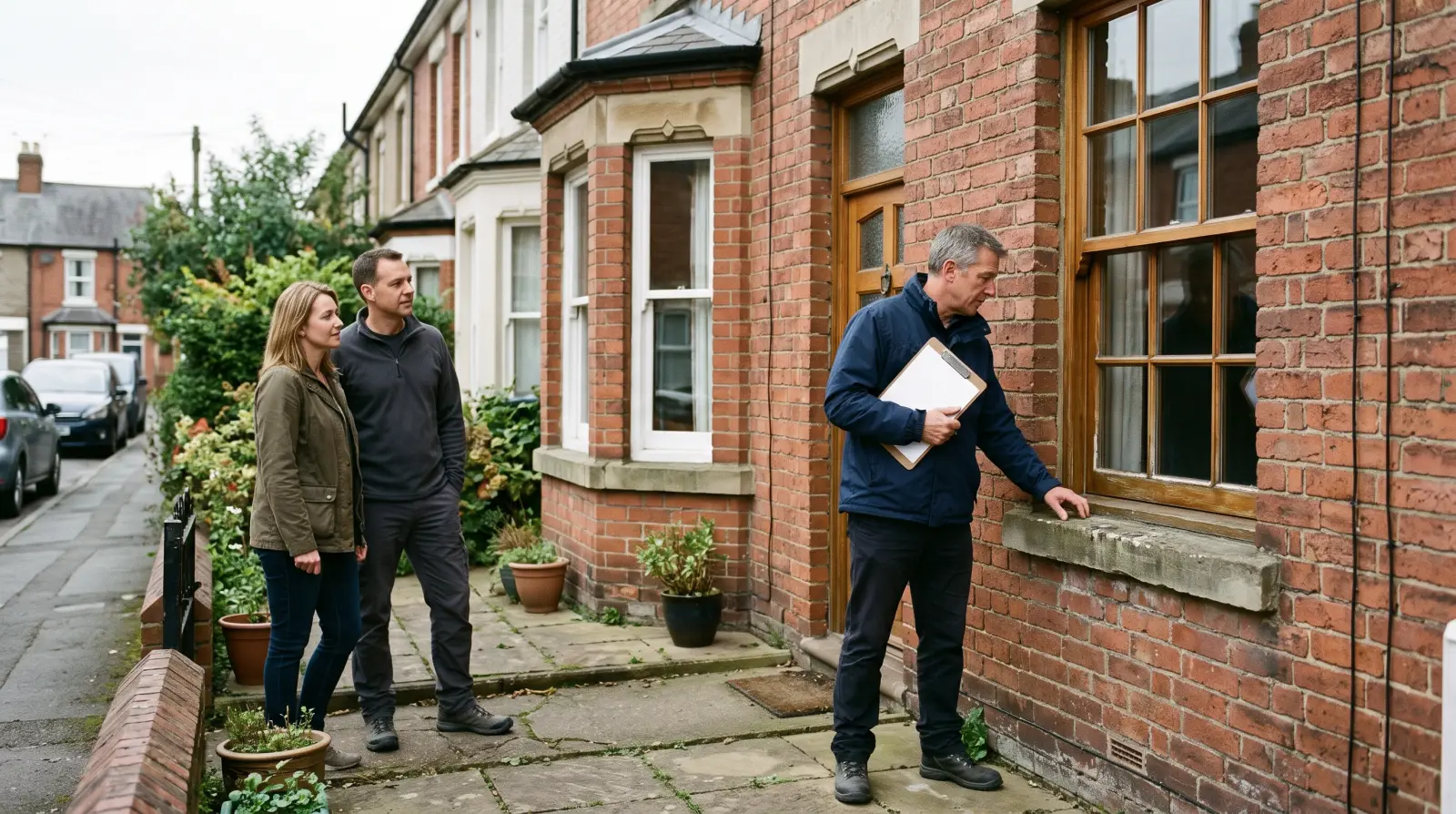
An offer has been accepted, the lender has booked its valuation, and the question comes up of whether a survey is needed as well. The answer depends on the house, and on what the buyer wants to know.
A home survey is an inspection carried out for the buyer, describing the condition of the property and pointing out defects, risks and things to ask about before exchange. In England, Wales and Northern Ireland, most surveys sold to home buyers follow the RICS Home Survey Standard, which sets out three levels. The levels differ in how far the surveyor looks and how much advice the report gives.
The valuation is for the lender
Buyers with a mortgage often assume the lender's valuation covers the condition of the house. It does not. RICS describes a mortgage valuation as being for the benefit of the lender, not the buyer. It is a limited check that the property is suitable security for the loan, and it is not a survey.
A valuation can still flag a serious issue that affects the price, but it is not designed to find the damp patch behind a wardrobe or the slipped roof tiles. That is what the survey levels are for.
The three survey levels
Level 1
Formerly known as a Condition Report, Level 1 is aimed at conventional, newer homes. It describes the condition of the property, identifies risks and potential legal issues and highlights urgent defects. It generally gives no advice on how to deal with the defects it finds.
Level 2
Formerly the HomeBuyer Report, Level 2 suits conventional homes in reasonable condition. It goes further than Level 1, including a fuller inspection of the roof space and of drainage chambers where they can be accessed, and it gives advice on repairs and ongoing maintenance. Level 2 comes in two versions: survey only, or survey and valuation. The valuation version adds a market value and an insurance reinstatement figure and must be carried out by an RICS Registered Valuer.
Level 3
Formerly the Building Survey, Level 3 is the most detailed. It is meant for large or older homes, homes in poor condition, unusual or much-altered buildings, and anyone planning major works. It gives an in-depth analysis of the building's condition and sets out options for repair.
The levels side by side
| Level 1 | Level 2 | Level 3 | |
|---|---|---|---|
| Old name | Condition Report | HomeBuyer Report | Building Survey |
| Typical home | Conventional, newer | Conventional, reasonable condition | Large, older, run-down, unusual or altered |
| Roof space and drains | Limited | Fuller inspection where accessible | In depth |
| Advice on defects | Generally none | Repairs and maintenance | Detailed analysis and repair options |
| Valuation | No | Optional version | Ask the firm |
Summary for orientation only. The exact scope is set out in the terms of engagement a surveyor sends before the inspection, and some firms offer extras.
On cost, RICS itself gives only broad markers: a Level 1 survey can start at a few hundred pounds, and some bespoke Level 3 services cost more than £1,000. Prices depend on the size, value and location of the home, so quotes from two or three firms are the practical guide.
How findings are reported
Level 1 and Level 2 reports usually give each part of the building a simple condition rating, running from no repair currently needed, through repairs that are needed but not serious or urgent, to serious or urgent defects that should be investigated before committing to the purchase. Reports also note parts that could not be inspected and documents a buyer's conveyancer may want to request.
The most useful habit is to read the urgent items first and then the list of legal questions, and to pass the latter to the conveyancer. A serious defect is not automatically a reason to walk away. It may be a reason to get a quote from a builder and, sometimes, to discuss the price.
The valuation tells the lender the house is worth lending on. The survey tells the buyer what they are taking on.
Matching the level to the house
The level is a choice about the building rather than the price. A purpose-built flat in a block a few years old will rarely need the depth of a Level 3. A Victorian terrace with an extension, a cottage with solid stone walls or a house that has been empty for a while is a different matter.
Some practical pointers:
- A newer, conventional home in good order: Level 1 or Level 2.
- A typical older home in reasonable condition: Level 2, with the valuation version if a second view on price is wanted.
- An older or larger home, a listed or unusual building, or a home where works are planned: Level 3.
A survey and an Energy Performance Certificate answer different questions. Our explainer on what the EPC letter tells you covers the energy side, and if the survey comments on an elderly boiler, our guide to replacing an old boiler sets out the options.
Who carries out a survey
RICS home surveys are carried out by RICS members, holding the AssocRICS, MRICS or FRICS designation. Firms that are regulated by RICS can say so in their marketing and paperwork, usually with the words "Regulated by RICS". RICS runs a Find a Surveyor directory, but notes that not every firm listed there is RICS-regulated, so the wording on the firm's own documents is worth checking.
The standard itself is the first edition of the RICS Home Survey Standard, in force since 1 March 2021. A second edition has been consulted on, but RICS currently tells its members to keep using the first edition.
Worth checking: before booking, ask the firm to confirm in writing which level it is providing, whether a valuation is included, and that the work is regulated by RICS. The terms of engagement should state all three.
Buying in Scotland
Scotland works differently. Sellers must provide a Home Report, which has three parts: a single survey and valuation, a property questionnaire filled in by the seller, and an energy report that includes the EPC. The seller must provide it within 9 days of a prospective buyer asking for it. Some homes are exempt, such as new builds sold off-plan, although an exempt home still needs an EPC.
Because the survey is commissioned by the seller, buyers in Scotland usually read the Home Report first and then decide whether they want any further inspection of their own.
Who this matters for, and what to check
This matters most to first-time buyers, people moving to an older home, and anyone downsizing into a property they know little about. Points worth checking:
- That you understand the lender's valuation is not a survey.
- The age, construction and condition of the house, and any work you plan, before choosing a level.
- The level, the valuation option and the RICS regulation, confirmed in writing.
- The urgent items and the legal questions in the report, shared with your conveyancer.
- In Scotland, the Home Report provided by the seller.
Paying anyone a deposit or fee is easier when you know who they are: the same instinct lies behind our guide to checking a firm on the FCA Register.
The short version
A mortgage valuation protects the lender; a survey informs the buyer. RICS offers three levels, from a short condition report for newer conventional homes to a full building survey for older, larger or altered ones, with Level 2 in between and an optional valuation. Choose by the building, check the surveyor is regulated by RICS, and in Scotland start with the seller's Home Report.
Official sources
- RICS: House surveys in the UK, the costs, types and benefits of an RICS home surveyThe three levels, mortgage valuation, who carries them out, cost markers
- RICS: Home survey standardsFirst edition in force since 1 March 2021
- mygov.scot: Home ReportScotland: survey, questionnaire and energy report; 9-day rule
 03 / Home
 04 / Money safety